
Wasp Nest Removal in Laois & the Irish Midlands
Found a wasp nest in your loft, shed, or garden? We remove active nests quickly and safely, with same-day callouts through the busy summer season. Local, fully insured, and NPTA-registered.
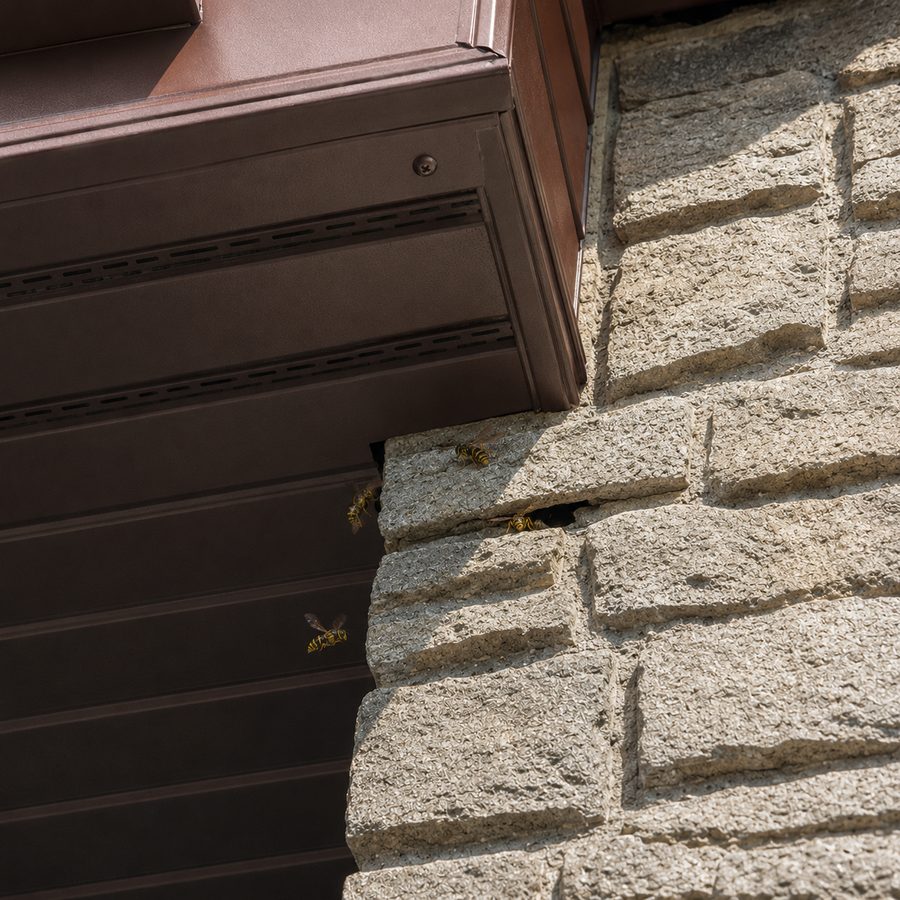
Wasp Season in the Midlands
Every summer we get a run of calls about wasps. A nest that started as a small, papery ball back in spring can hold several thousand wasps by August, and once it is that size the colony gets defensive fast. Disturb it, and you can be dealing with a swarm of angry wasps in seconds.
The two you will almost always meet in Ireland are the common wasp (Vespula vulgaris) and the German wasp (Vespula germanica). Both build the familiar grey paper nests and both scavenge around bins, sheds, and outdoor eating areas as the season goes on. They are useful garden predators for most of the year, so removal is only worth it when a nest is somewhere it puts people at risk.
We cover Laois, Offaly, Tipperary, Kildare, Kilkenny and Carlow, and in wasp season we aim to get to you the same day. As an NPTA member, we treat nests at the source with the right equipment, so the colony is dealt with properly rather than scattered.
Why a Wasp Nest Is Worth Sorting Early
A nest near your home only gets harder to live with as the summer goes on.
They Sting Again and Again
Unlike a bee, a wasp can sting repeatedly and will defend the nest hard if it feels threatened. A nest by a door, path, or window makes everyday jobs like mowing or hanging washing genuinely risky.
Sting Reactions Can Be Serious
For most people a sting is painful but harmless. For anyone allergic, it can trigger a severe reaction that needs urgent medical care. If there are children, elderly relatives, or known allergies in the house, a nearby nest is not worth the gamble.
Nests Only Get Bigger
Through May to September the colony grows week on week and wasps become more aggressive as autumn approaches. The sooner it is treated, the smaller and easier the job, and the less disruption to your summer.
How to Tell You Have a Nest
You do not always see the nest itself. Often the first clue is a steady stream of wasps coming and going from one spot. Watch for:
- A regular flight path - wasps coming and going from a single point in the roof, eave, wall, or hedge
- A grey papery nest - a swirled, ball-shaped structure, from golf-ball size early on to football size or larger
- A faint humming in a wall cavity, attic, or ceiling space
- More and more wasps indoors, especially near one room, window, or vent
- Clusters around bins, compost, or the patio as the colony forages for food
How We Remove a Wasp Nest
A straightforward job, usually done in a single visit.
Call or Message
Tell us where you have seen the wasps and roughly where the nest is. We will give you a price over the phone and arrange a visit, often the same day.
Locate the Nest
On arrival we track the wasps back to the nest, whether it is in the loft, a wall cavity, under the eaves, in a shed, or underground in the garden.
Treat at Source
We apply a professional treatment directly to the nest using proper protective equipment, so the whole colony is dealt with rather than scattered.
Safe and Clear
Wasp activity drops off over the following hours as the colony dies down. We tell you what to expect and when it is safe, and give advice to deter next year's queens.
Please Don't Tackle It Yourself
Shop-bought sprays and DIY tricks often make things worse. Half-treating a nest, or knocking it without the right kit, tends to send the colony into defence mode and scatter the wasps instead of clearing them, and that is when people get stung badly.
Getting a professional in means it is done once, done safely, and without you having to go up a ladder or into a hot loft with thousands of wasps.
- Proper protective equipment and professional-grade treatment
- Nests handled at height, in attics, and in awkward cavities
- The colony treated at source, not just the wasps you can see
- Local, fully insured, and NPTA-registered
Think you've seen an Asian hornet?
The Asian hornet (also called the yellow-legged hornet) is not established in Ireland. A small number were found and dealt with by the authorities in 2025, so official advice is to report a suspected sighting rather than remove it.
You can tell it apart by its dark body and distinctive yellow lower legs. It is a threat to honeybees rather than a public danger.
If you think you have seen one, please report it at invasives.ie and do not disturb it. For ordinary wasp nests, we are happy to help - just give us a call.
Where Wasps Build Nests
We reach nests in all the usual Irish hiding spots, indoors and out.
Lofts & Attics
Roof voids, ceiling spaces, and around soffits and rooflines
Wall Cavities & Eaves
Gaps in brickwork, air bricks, vents, and under the eaves
Sheds & Outbuildings
Garages, garden sheds, barns, and stored machinery
Gardens & Underground
Hedges, bushes, under decking, and in banks or old burrows
Wasp Nest Removal FAQs
Common questions from homeowners across the Midlands.
Wasp Nest Bothering You? Let's Sort It.
Same-day callouts across Laois, Offaly, Tipperary, Kildare, Kilkenny and Carlow.